AI-assisted carbon accounting for U.S. manufacturers
Turn scattered carbon data into answers you can explain.
Explore how OCEANS Sustainability's AI-assisted platform connects operational records, emissions calculations and supporting evidence—and discuss the help available for your next customer reporting request.
Founder-led questionnaire support is available now. Platform access is currently through the Founding Design Partner Program.
Meet the founder. Review an example. Discuss your next step.
No confidential documents needed to start. No obligation afterward.
Facing an urgent EcoVadis or OEM deadline? Request a 15-minute deadline reviewOne number, traced end to end
- 1Trace the source
Source record
A utility invoice, fuel log, or ERP export
- 2
Activity quantity and unit
Recorded consumption, converted to the unit its factor requires
- 3Understand the calculation
Calculation and factor reference
A documented emission factor, kept beside the result it produced
- 4
Resulting emissions figure
Reported with its source and method attached, never as a bare number
- 5See what needs review
Evidence link and review status
Drafted → reviewed → approved by your team
OCEANS™ Sustainability is also an AI-assisted carbon-accounting platform designed to connect operational records, Scope 1–3 calculations, supplier information and supporting evidence.
Explore the platformHow a response gets built
Follow one number from source to response.
- Utility invoiceReceived
- Fuel logReceived
- ERP export, Q3Gap flagged
See what information is missing.
Utility bills, fuel logs, ERP exports, and prior submissions are normalized into one structure using AI-assisted extraction and classification, with gaps and inconsistencies surfaced before any number is calculated — not discovered after submission, and every material field left available for human review.
Part of the founder-led response service today; a guided in-platform version is in active development.
How OCEANS™ Sustainability works
One connected path from operational records to a reduction decision.
01
Measure emissions
Operational records — fuel, electricity, purchased materials, freight — are organized with AI-assisted extraction and classification, then connected to Scope 1, 2, and 3 calculation methods built on the GHG Protocol Corporate Standard and published EPA/eGRID emission factors, so every figure traces back to its source and its assumptions.
Explore the methodology02
Understand suppliers
Procurement records are classified against Scope 3 categories, supplier evidence and data gaps are made visible, and requests focus on the suppliers whose data would actually change the result — not a blanket questionnaire to everyone.
Explore Scope 3 and supplier data03
Plan reductions
A proposed sourcing, material, or logistics change is compared against a documented baseline using consistent quantities and boundaries, with assumptions and cost information shown explicitly where supported — a comparison to review, not an automated recommendation.
Explore supplier decarbonization planningWhere OCEANS™ Sustainability fits
Not a replacement for spreadsheets, consultants, or enterprise platforms — the option between them.
Each of the realistic alternatives is a reasonable choice in the right situation. Here's where each one tends to work, and where a lean manufacturing team runs into its limits.
Spreadsheets and manual tracking
Works well when
You have one simple facility and time to rebuild the calculation by hand each time.
Falls short when
A customer or auditor asks how a number was calculated, or a second person needs to maintain it.
Generalist sustainability consultants
Works well when
You need broad ESG strategy advice across governance, social, and environmental topics.
Falls short when
You need someone who lives in emission-factor selection and questionnaire mechanics, fast.
Enterprise ESG platforms
Works well when
You're a large company ready for a multi-department software rollout and annual contract.
Falls short when
You have one questionnaire due and need it answered, not a year-long implementation.
OCEANS™ Sustainability
Built for
Growing U.S. manufacturers who need one traceable, source-linked customer response — without a multi-month rollout or an enterprise contract.
In practice
Founder-led, methodology built on public GHG Protocol and EPA/eGRID standards, scoped and priced per request.
Our take: most manufacturers don't need an enterprise ESG platform to answer one customer's questionnaire — they need someone who can trace the number, document the method, and hand it back fast. That's the specific gap OCEANS™ Sustainability is built to close.
One manufacturing example
From a purchase record to a reduction option worth reviewing.
Baseline
- Material
- Virgin aluminum extrusion
- Quantity
- 18,400 kg
- Factor (hypothetical)
- 8.5 kg CO₂e / kg
156.4 tCO₂e
Alternative
- Material
- 30%-recycled-content aluminum extrusion (same functional volume and spec)
- Quantity
- 18,400 kg (same functional volume)
- Factor (hypothetical)
- 6.2 kg CO₂e / kg
114.1 tCO₂e
Difference: 42.3 tCO₂e lower, on paper. Both factor values are hypothetical assumptions used for illustration — not sourced from EPA, a licensed factor database, or a specific supplier. The comparison holds quantity, functional requirements, reporting period, and transport assumptions constant. This is modeled potential, not an achieved reduction: an actual comparison would require supplier-specific data and confirming the alternative material meets your technical specifications. This is a hypothetical example, not a real customer record — see the full comparison .
Why this matters to a lean team
Built for teams without a dedicated sustainability department.
Data ownership
Your team keeps the underlying records and assumptions, not just a finished number handed back with no way to check it.
Traceability
Every calculation connects back to its source data, method, and factor, so a result can be explained, not just reported.
Focused supplier follow-up
Effort concentrates on the suppliers and data gaps that would materially change the result, instead of the same broad request sent to everyone.
See what your team could receive
An ungated look at the response package itself.
Customer question
"Provide your total Scope 1 GHG emissions for your most recently completed fiscal year and describe your calculation methodology."
Draft answer (excerpt)
Emissions are calculated from metered activity data, converted to a standard unit and applied to a documented emission factor—cited to its evidence reference rather than stated as a bare figure.
Source-reference excerpt
EV-001 – EV-003
Calculation excerpt
Activity × factor = result
Disclosed data gap
One record was incomplete — disclosed with a named owner, not smoothed over.
You bring the request. We agree the work.
Your team
Shares the request and agreed records, clarifies unresolved questions, and approves the final response.
OCEANS™
Performs the agreed organization, calculation, documentation, and response-preparation work, and flags gaps that need a customer decision.
This describes the founder-led response service available today. Not every EcoVadis theme, every Scope 3 category, or third-party assurance is automatically included — scope is confirmed before work begins.
Why work with an early-stage, founder-led team
We're early. Here's exactly what that means for you.
There's no long list of case studies yet — because there's no long list of customers being run through a template. Here's what that trade-off actually gets you.
The founder reviews every result
No account handoff and no junior analyst learning on your file — the person who built the methodology checks the calculation before it reaches you.
Public standards, not a black box
Every method follows the published GHG Protocol standards and cited EPA/eGRID emission factors — the same ones you can check yourself, not a proprietary formula you have to trust blindly.
Scoped to your questionnaire, not a tier
Price and scope are set after reviewing your actual EcoVadis or OEM request — not a fixed package built for a different company's business.

Sai Praneeth
Founder, OCEANS Sustainability
Sai Praneeth brings more than eight years of experience across carbon accounting, greenhouse-gas emissions, environmental data, and sustainability. Bring your reporting challenge, and let's work out the next step.
Review a sample with the founder and discuss the information, scope, and support your team needs.
No confidential documents needed for the initial conversation.
Request a walkthroughEcoVadis and OEM Questionnaire Response
Turn scattered energy, fuel, and ERP records into a source-linked Environment and GHG response led directly by the OCEANS™ founder.
Useful resources
Free checklist
The EcoVadis Environment Evidence Checklist for US Manufacturers
The exact energy, fuel, and emissions evidence to collect before you answer ENV310 — plus the data-request templates that cut collection time. Free.
Practical guides for manufacturing teams
In-depth reports, gated behind a short form — distinct from the free checklist above.
Guide
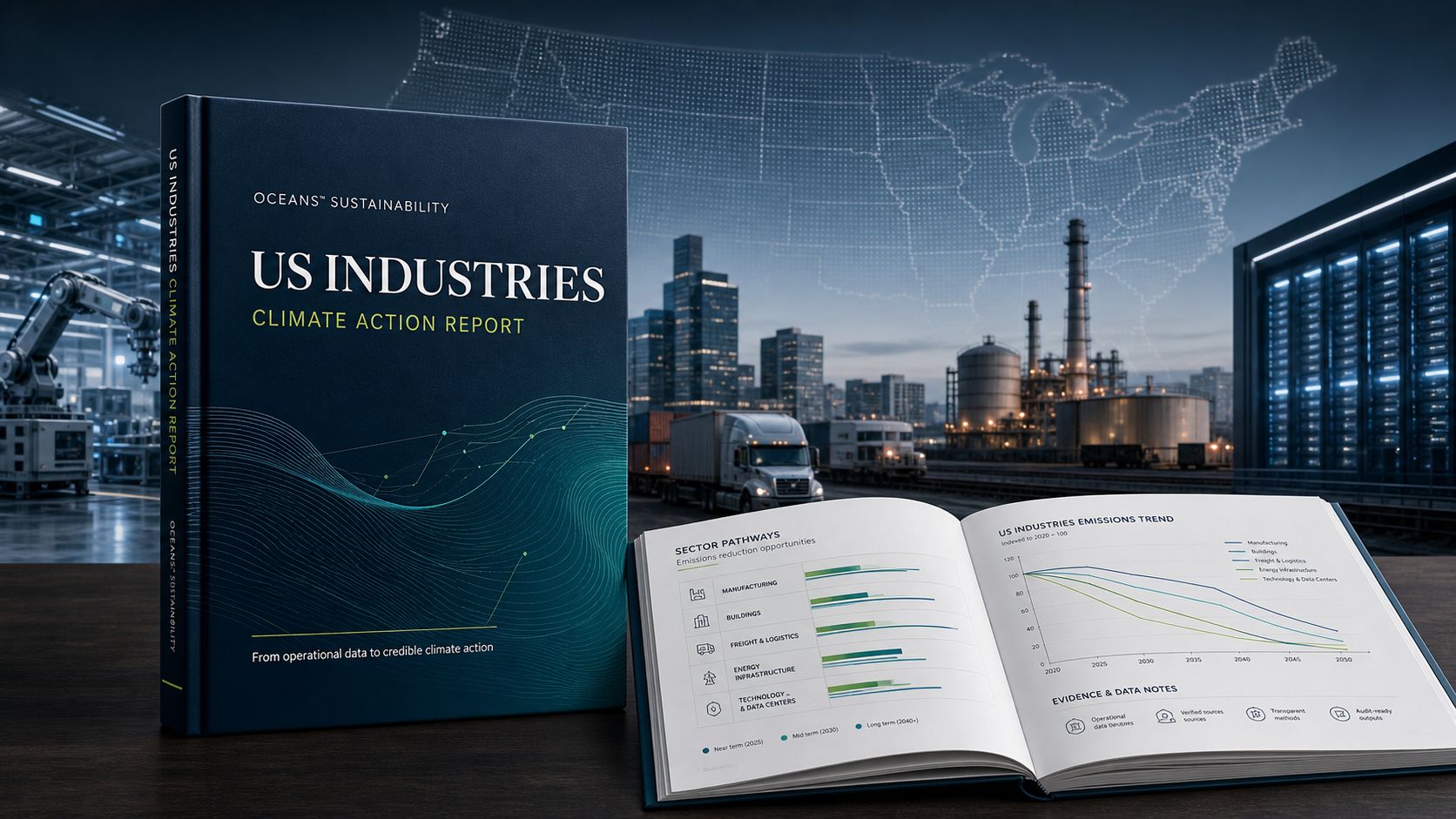
U.S. Industrial Climate Action Outlook: 2027
An evidence-led outlook for U.S. industrial companies preparing for 2027 climate, customer, and assurance demands. It explains why controlled, reusable emissions evidence—not disclosure alone—is becoming the operating advantage.
Checklist
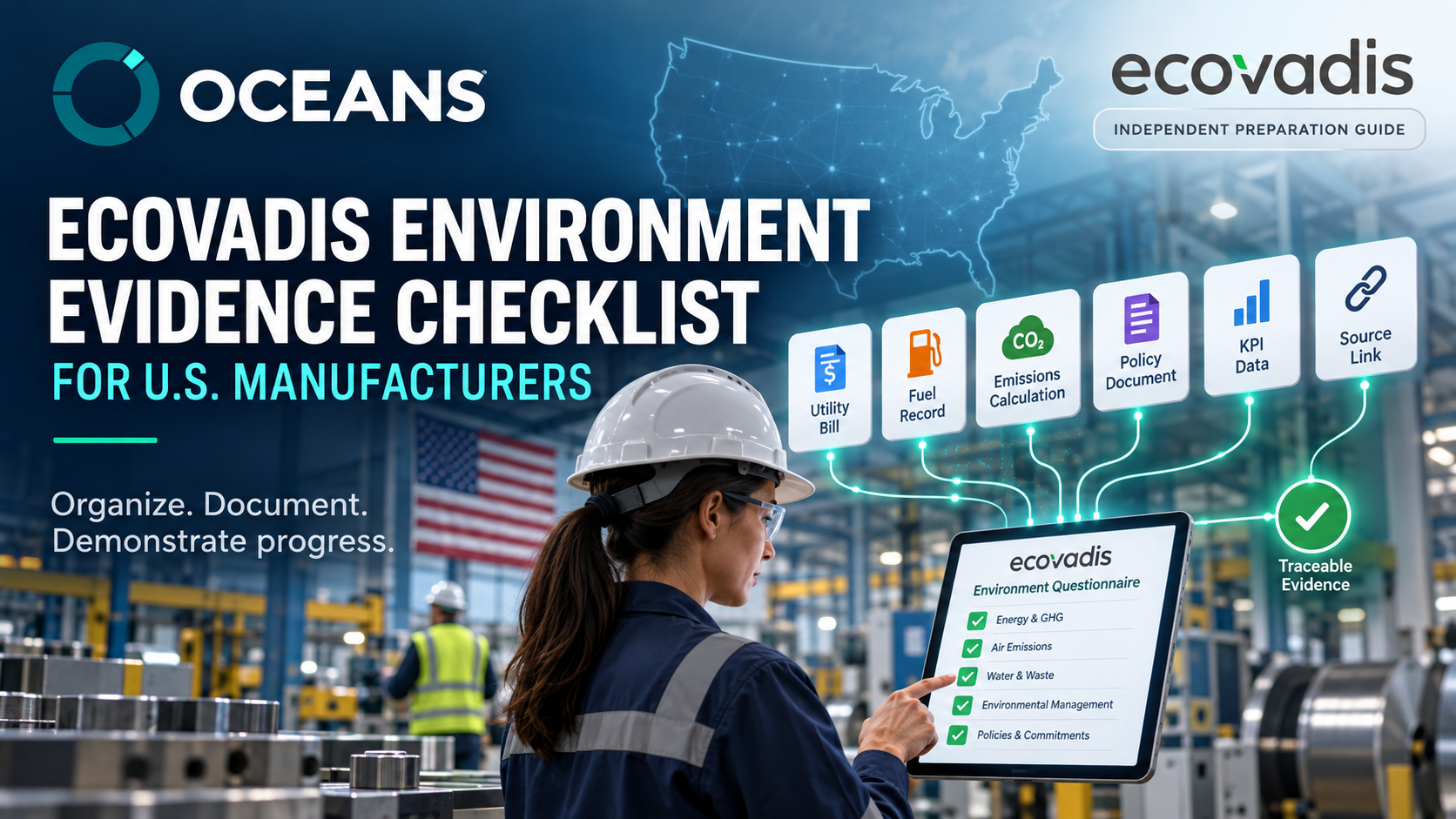
The EcoVadis Environment Evidence Checklist for US Manufacturers
The exact energy, fuel, and emissions evidence to collect before you answer ENV310 — plus three ready-to-send data-request templates that cut collection time.
Guide
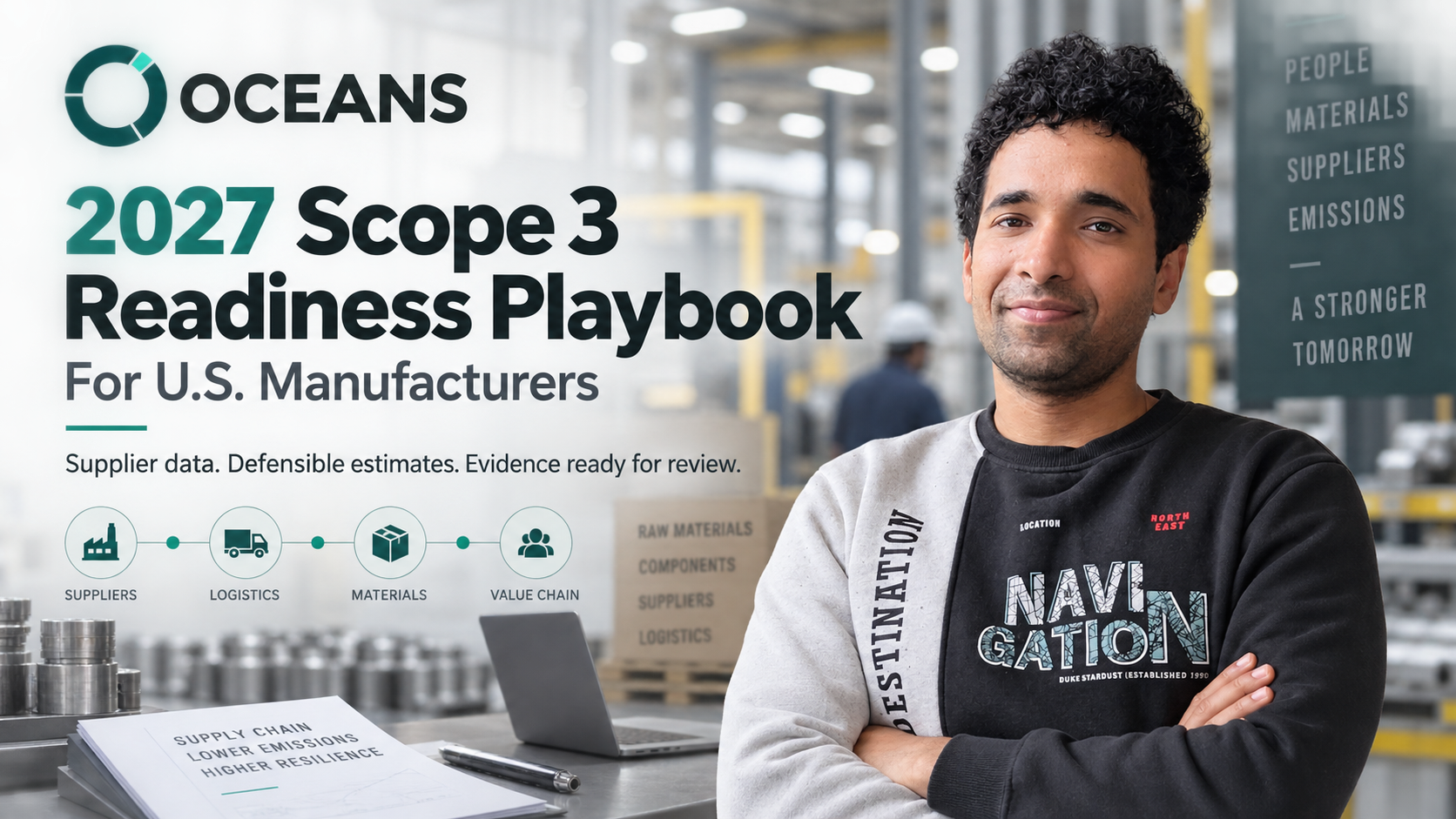
2027 Scope 3 Readiness Playbook for U.S. Manufacturers
A practical seven-slide playbook to help U.S. manufacturers prioritize Scope 3 categories, improve supplier data, document estimates and prepare for 2027 reporting and customer requests.
Getting started with OCEANS™
Founding Design Partner Program
OCEANS™ Sustainability is in active product development. Access is currently through this program, not general availability — joining means shaping and previewing the product as it's built.
Who it suits
Growing US manufacturers ready to review early workflows and help shape calculation methods and priorities directly.
What to bring
A rough picture of your current data — utility bills, procurement records, supplier files — and where Scope 3 or reduction planning feels hardest today.
After you reach out
We review your context and arrange a focused conversation if there's a fit — no forced sales process.
Insights
Latest from the field.
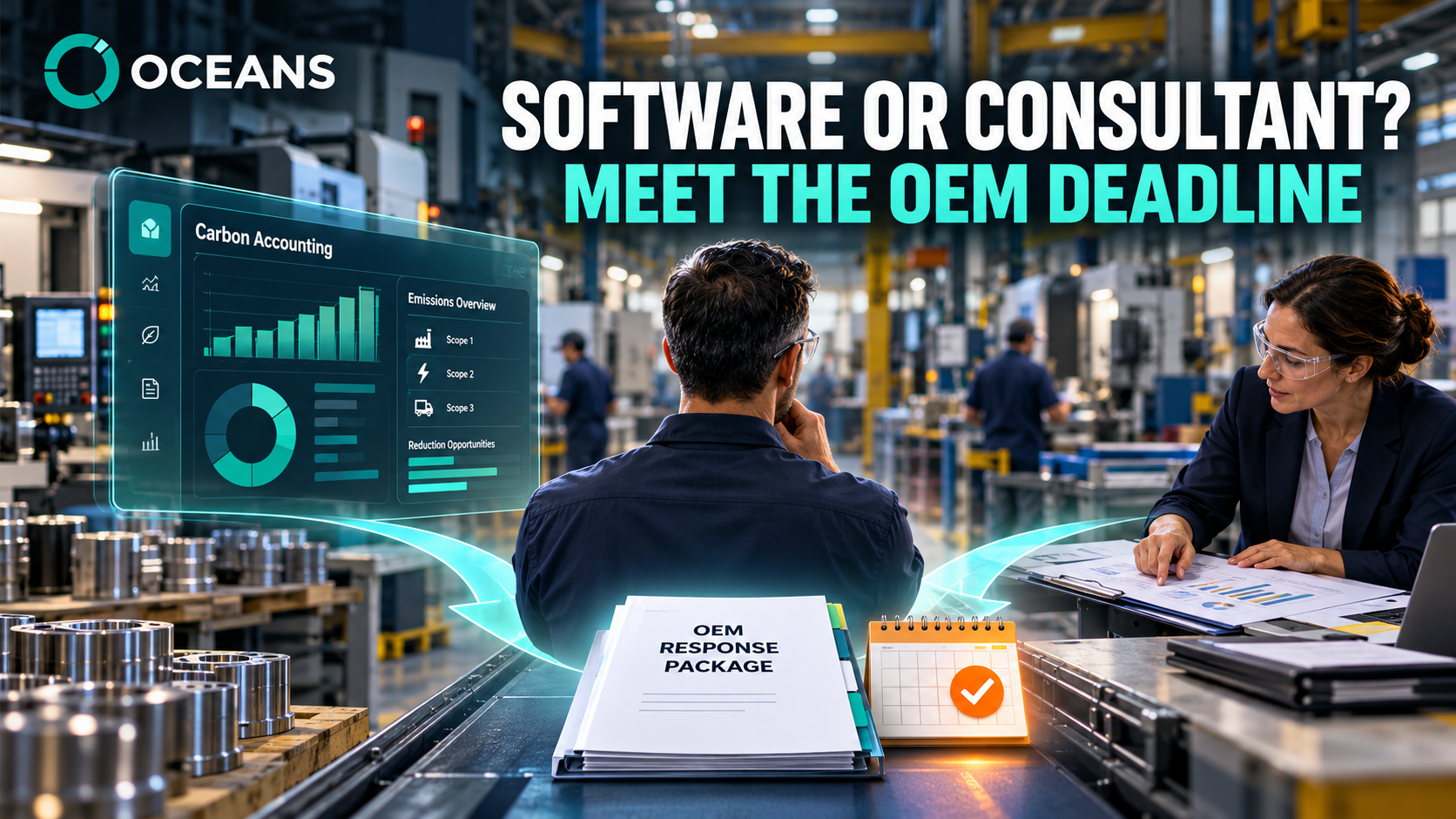
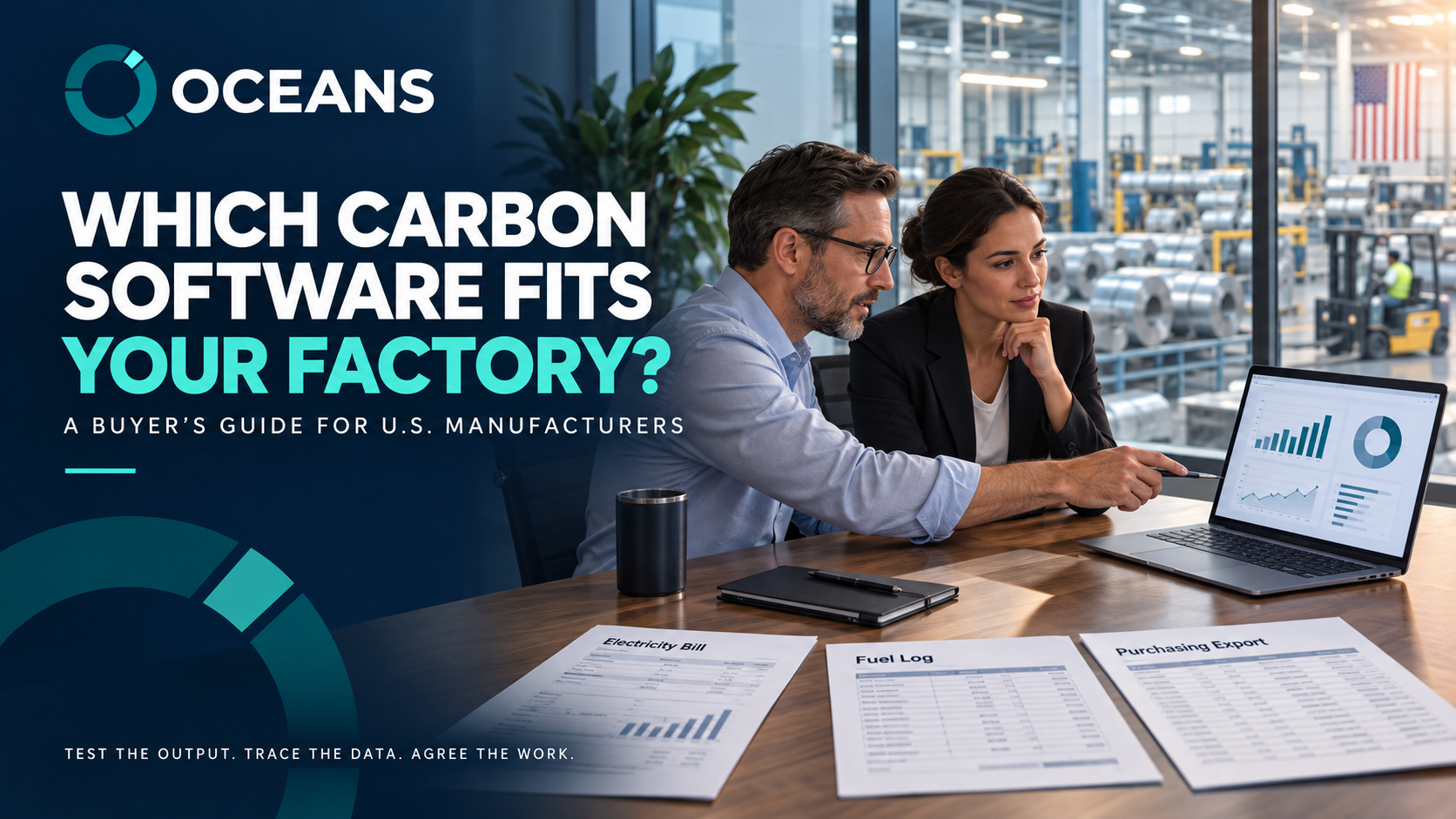
Carbon Accounting Software or Consultant? A U.S. Manufacturer’s Guide to Meeting an OEM Deadline
Oct 6, 2026
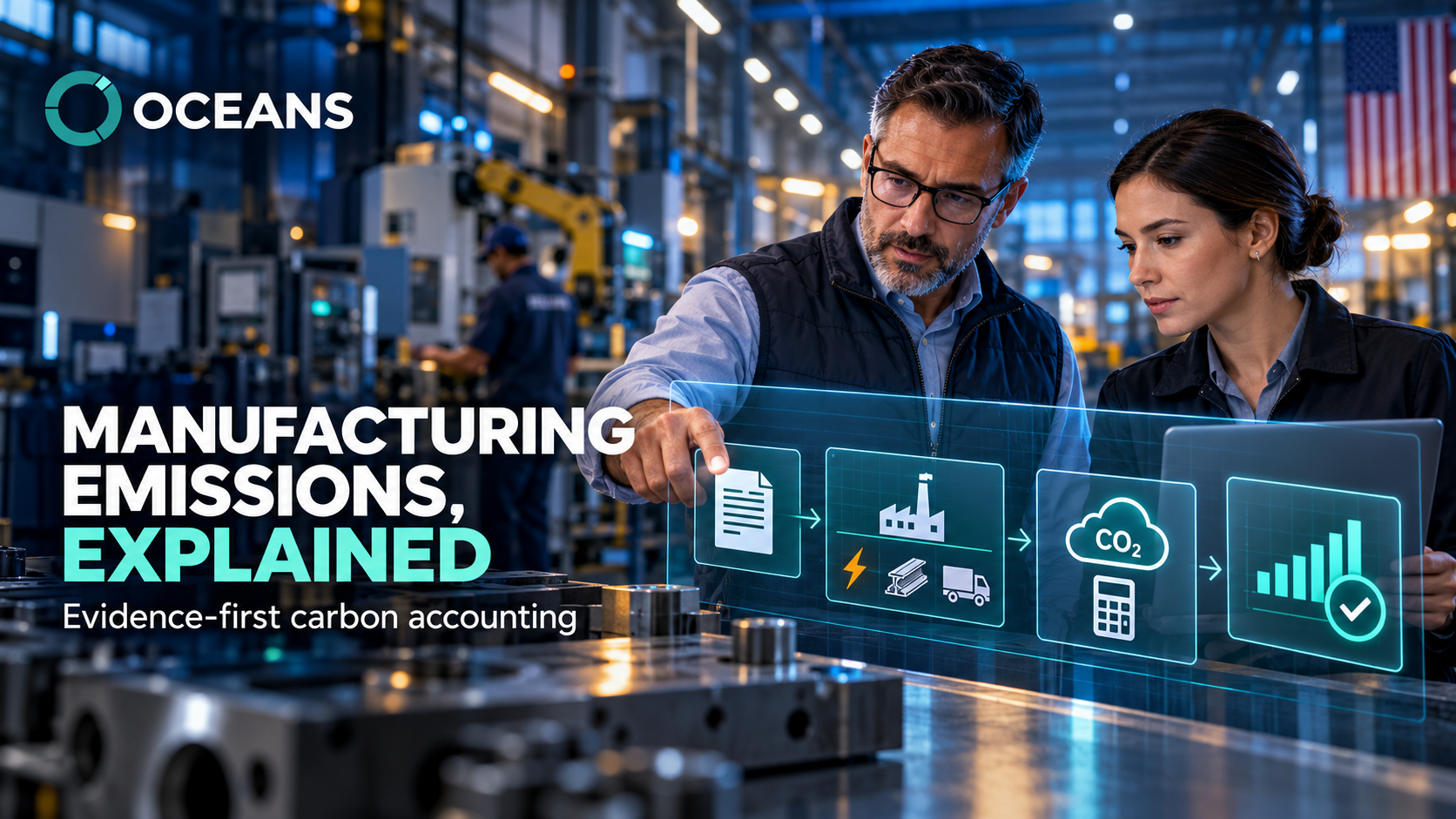
OCEANS Sustainability for Manufacturing Emissions
Sep 30, 2026
What is the best carbon accounting software for mid-sized industrial manufacturers?
Sep 29, 2026
Questions
Frequently asked questions.
Who is OCEANS Sustainability designed for?
Growing US manufacturers with lean sustainability, procurement, EHS, finance, or operations teams — typically without a large dedicated sustainability department.
How does it approach Scope 3 supplier data?
By connecting procurement records to categorized Scope 3 data, prioritizing the suppliers and data gaps that materially affect the result, and keeping calculation methods and assumptions visible. See the Scope 3 and supplier data page for the full workflow.
How does reduction planning relate to carbon accounting?
Once Scope 1–3 results show where emissions concentrate, reduction planning compares sourcing, material, or logistics alternatives against that same documented baseline — see supplier decarbonization planning.
What can I access or discuss today?
OCEANS Sustainability is in active product development, with access currently through the Founding Design Partner Program. The supplier-data checklist and any published reports are free to read without contacting us first.
What happens to the information I share?
No confidential documents are needed for an initial conversation. Anything you do share is used only to prepare your response or evaluate fit, never sold or shared with third parties — see the Privacy Notice for details.
Is there any obligation after the initial conversation?
No. A walkthrough or founder conversation is exploratory. You decide afterward whether a paid response engagement or the Founding Design Partner Program is the right next step — or whether it isn’t a fit yet.
Is OCEANS™ related to ocean or marine conservation?
No. OCEANS™ (Operational Climate, Evidence & Assurance Network System) is a carbon-accounting brand for U.S. manufacturers. The name is unrelated to ocean, marine, or water conservation work.
See what a traceable carbon response looks like.
Review an example, discuss your reporting request, and understand the next steps with OCEANS™ Sustainability.
We’ll follow up to arrange a time that works for you.